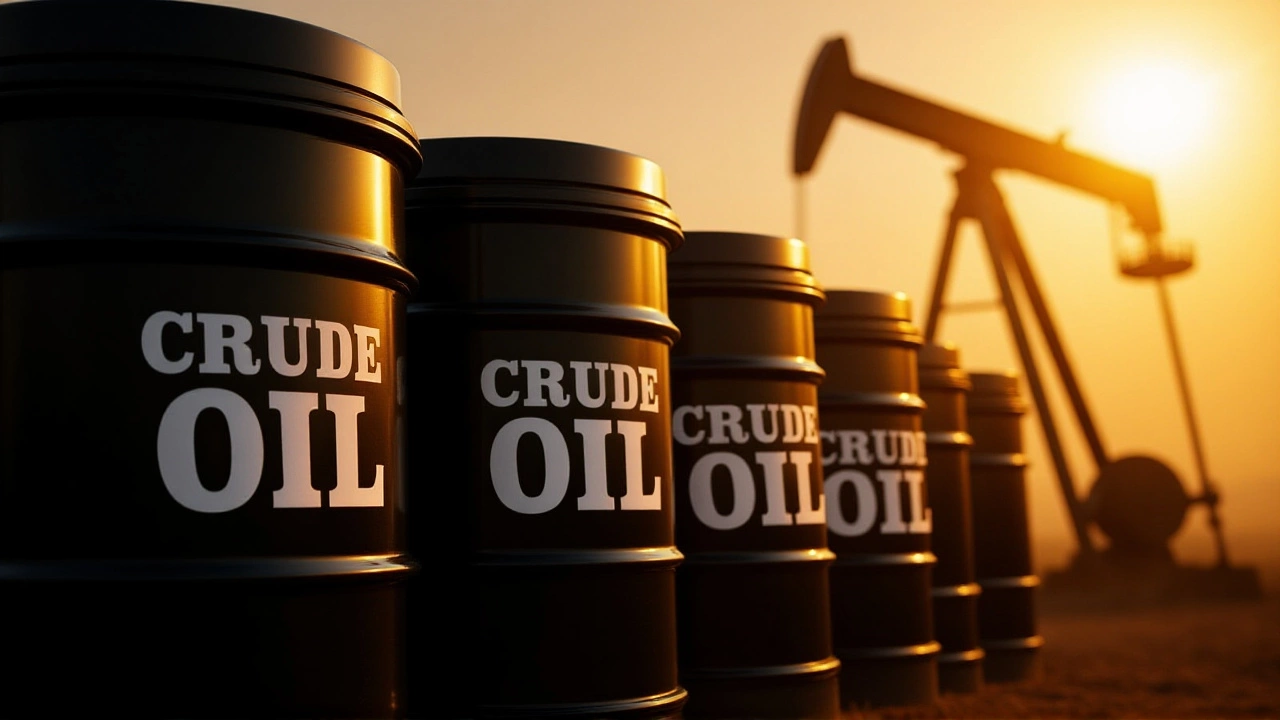
Global energy markets are in freefall, or rather, skyrocketing, as Brent Crude shattered the psychological barrier of $100 per barrel on Monday. But here’s the kicker: it didn’t stop there. Within hours, prices surged past $110, touching a peak of approximately $114 by 9:15 AM trading time. This isn't just a minor fluctuation; it's the first time in over three years that international crude has breached this critical threshold, driven directly by escalating tensions between Iran and Israel.
The twist is how fast this happened. Just last Friday, Brent Crude was closing at a relatively stable $92.69 per barrel. By Monday morning, we’re looking at a staggering 21% jump in less than 48 hours. American benchmark West Texas Intermediate (WTI) followed suit, leaping from $90.90 to nearly $114 per barrel—a 23% spike that left traders scrambling.
The Geopolitical Trigger
So, what caused this sudden shockwave? The primary driver is the ongoing military conflict in the Middle East. Reports indicate that hostilities between Iran and Israel have disrupted key production zones and shipping routes. When you threaten the supply lines of one of the world’s most volatile regions, the market reacts with fear. Traders aren't just buying oil; they're buying insurance against potential supply disruptions.
This mirrors previous crises. Remember the Russia-Ukraine war? Back then, sanctions on Russian refineries and stockpile drops pushed prices toward $120 per barrel. In fact, recent data suggests Brent Crude hit $119.84 per barrel recently—the highest level since May 2012. Now, history seems to be rhyming again, but with different players on the board.
Impact on Your Wallet
You might be wondering, "How does this affect me?" The answer is immediate and painful. Higher crude prices mean higher costs for transportation, manufacturing, and heating. In the United States, the average price for gasoline has already climbed to $3.45 per gallon, up 47 cents from just a week ago. Diesel, crucial for logistics and freight, has reached $4.60 per gallon.
In Pakistan, consumers are feeling the pinch too, with petrol and diesel prices rising by 55 rupees. Meanwhile, in India, where LPG prices were recently hiked, experts warn that petrol and diesel rates could follow shortly. The ripple effect is undeniable: when fuel gets expensive, everything else—from groceries to electronics—gets more expensive too.

Market Psychology and Future Outlook
The current surge is partly fueled by panic buying. Investors are flooding into future contracts, betting that prices will stay high due to sustained geopolitical instability. Oddly enough, while some analysts predict a correction if diplomatic talks resume, others argue that the structural damage to supply chains could keep prices elevated well into next year.
We’ve seen similar volatility before. In 2022, crude oil prices jumped by over 40% amid global uncertainty. The difference now is the speed of the ascent. A 28% weekly increase for Brent Crude is not just unusual; it’s alarming. It signals a market that is deeply uncertain about its own stability.

Frequently Asked Questions
Why did oil prices jump so sharply on Monday?
The sharp increase was triggered by escalating military tensions between Iran and Israel, raising fears of supply disruptions in the Middle East. Traders rushed to buy futures contracts, driving prices from $92.69 to over $114 per barrel in less than two days.
How will this affect gasoline prices in the US?
US gasoline prices have already risen to an average of $3.45 per gallon, a 47-cent increase from the previous week. With crude oil hovering near $114, further increases at the pump are likely as refiners pass on higher input costs to consumers.
Is this the highest oil price ever recorded?
No, but it is significant. While prices approached $120 per barrel during the Russia-Ukraine conflict, reaching highs not seen since May 2012, the current $114 mark is the highest level in over three years. Historical peaks exceeded $140 in 2008.
What is the difference between Brent Crude and WTI?
Brent Crude is a global benchmark based on North Sea oil, widely used for international pricing. WTI (West Texas Intermediate) is a lighter sweet crude produced in the US. Both benchmarks rose sharply together this week, reflecting global rather than regional supply concerns.
Could these high prices lead to global inflation?
Yes, experts warn that sustained high energy costs can drive up inflation globally. Increased transport and production costs force businesses to raise prices, reducing consumer purchasing power. Countries like India and Pakistan are already seeing impacts on local fuel and commodity prices.